The honest lifespan table
| Material | Realistic lifespan | What usually kills it | Can its life be extended? |
|---|---|---|---|
| 3-tab asphalt shingle | 15–20 years | UV dries the binder; granule loss, brittleness | Yes — cleaning, maintenance, rejuvenation in the 6-20 yr window |
| Architectural asphalt shingle | 20–28 years | Same binder dry-out, slower (thicker mat) | Yes — same playbook, better results |
| Metal (standing seam) | 40–70 years | Fastener back-out, sealant failure, coastal corrosion | Yes — fastener/sealant service every 10-15 yrs |
| Metal (exposed fastener) | 25–40 years | Screw gaskets fail long before panels | Yes — re-screwing and gasket replacement |
| Clay / concrete tile | 50+ (tile itself) | Underlayment dies at 20-30 yrs; cracked tiles from foot traffic | Partially — re-felt under existing tiles |
| Wood shake | 20–35 years | Moisture, moss, rot, fire codes | Somewhat — treatments and diligent cleaning |
| Slate | 75–150 years | Flashing and fasteners fail, not the stone | Yes — flashing service; the slate outlives everyone |
| Flat (TPO/EPDM/mod-bit) | 15–25 years | Ponding water, seam failure, UV cracking | Yes — coatings and seam service |
Why the warranty number is not the lifespan
A "30-year shingle" describes the warranty term, not a prediction — and the warranty itself is prorated, conditioned on ventilation and installation, and rarely pays out meaningfully in the years where failure actually happens. Manufacturers rate products under laboratory conditions; your roof lives under real sun, real storms, and whatever corners the installer cut. Treat packaging numbers as a ceiling, not an expectation.
The five factors that move every number
- 1Climate — UV exposure and heat cycling age asphalt faster than anything else; coastal salt attacks metal; freeze-thaw cracks tile. The same shingle lasts a decade longer in Minneapolis than Miami.
- 2Installation quality — bad nailing, skipped starter strips, and reused flashing take years off before the roof sees its first summer.
- 3Ventilation — a cooking attic bakes shingles from below. Many "old roof" failures are really ventilation failures.
- 4Color and orientation — dark roofs and south/west faces run hotter and age faster.
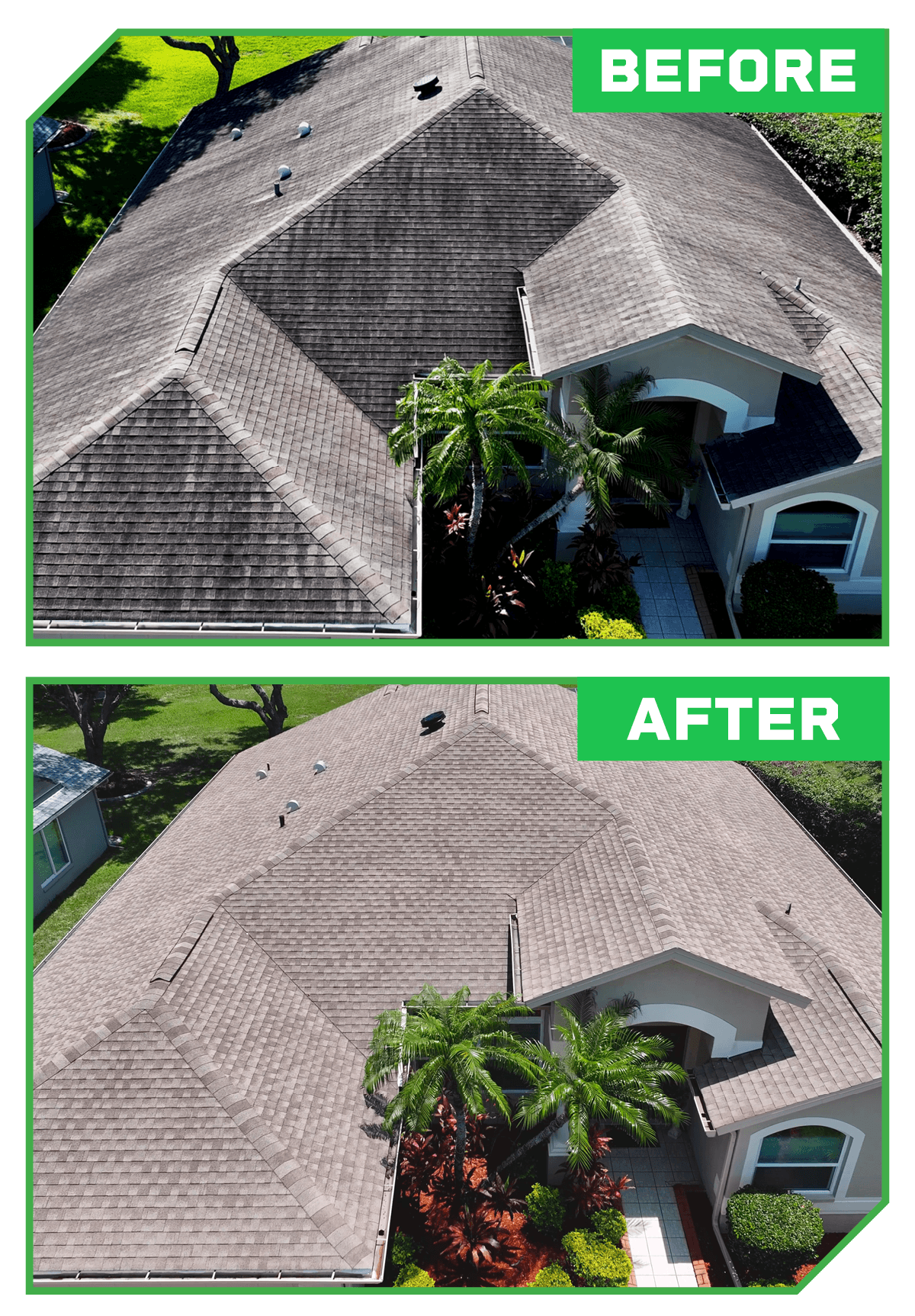
- 5Maintenance — debris, algae, and clogged valleys hold moisture against the roof. The cheapest years you will ever buy are the ones from keeping it clean.
Asphalt gets a special option the others do not
Asphalt shingles are unique on that table: their failure mode — the binder drying out — is chemically reversible in mid-life. Rejuvenation re-saturates the binder with plant-derived oils and adds 5-15 years to a roof that is aging but structurally sound. Slate does not need it, metal cannot use it, tile fails at the underlayment — but for the material on most American homes, the lifespan table has a footnote most homeowners never hear about. We break down how long the treatment lasts and every alternative to replacement if you are weighing options.
Frequently asked questions
How long does a roof last on average?
For the asphalt shingles on most US homes: 15-28 years depending on shingle grade, climate, and care. Metal, tile, and slate run far longer; flat membranes somewhat shorter. Averages hide the spread — condition assessment beats the calendar.
Which roof material lasts the longest?
Slate, at 75+ years, followed by clay tile and standing-seam metal. All three cost dramatically more upfront, and tile is only as good as the underlayment beneath it.
Do roofs in hot climates really wear out faster?
Yes, especially asphalt. UV and heat cycling evaporate the binder oils that keep shingles flexible — the mechanism rejuvenation exists to reverse. We wrote a Florida-specific version of this guide for exactly that reason.
Can maintenance really add years to a roof?
Measurably. Keeping the surface clean, valleys clear, and ventilation working removes the accelerants; for asphalt, mid-life rejuvenation restores the chemistry. The gap between a maintained and neglected identical roof is routinely 5-10 years.
Free on-roof inspection in Tampa Bay. We assess actual condition — not packaging promises — and tell you what your roof has left and how to extend it.