
Why the question gets asked
If you searched "is roof rejuvenation a scam" you are not paranoid. The question gets asked because three things have happened in the home services world over the last decade.
First, the category exploded faster than the operator pool. Demand jumped, suppliers started licensing formulas to anyone with a truck and a sprayer, and quality control got patchy. Some of those operators are excellent. Some are not. The brand on the truck does not always tell you which.
Another concern is treatment sold without a suitable roof assessment. Missing shingles, leaks, severe granule loss or deck damage need evaluation before treatment is considered. Selling a surface treatment without addressing the actual condition can leave the homeowner with the original problem.
Marketing claims can get ahead of the evidence. Ask what a test actually measured, whether the result applies to the proposed product and roof, and what the written warranty covers. A material test is not a measured added lifespan.
What rejuvenation actually does (the boring science version)
An asphalt shingle is a fiberglass mat saturated with asphaltic binder and topped with ceramic granules. The binder is what makes the shingle waterproof. It is full of plasticizing oils that keep the shingle flexible enough to expand and contract in heat without cracking.
Those oils are volatile. UV radiation, thermal cycling, and oxidation bake them out of the shingle over time. By year 12, most asphalt roofs have lost enough oil that the shingles start to dry, crack, curl, and shed granules. The roof still looks like a roof — until your insurer flags it.
Review the actual test report and identify the specimens, methods and properties measured. A material result does not establish how many extra years a particular roof will last. Shingle Hero’s independent lab-results article explains the measurements and the limits of the testing.
The five red flags of a roof rejuvenation scam
Red flag 1: Door-to-door pressure sale
Pressure to sign immediately is a reason to slow down and compare written options. Take time to review the operator, assessment, product and warranty. A provider should explain the recommendation without requiring a same-day decision.
Red flag 2: No written warranty, or warranty hidden behind disclaimers
A real rejuvenation company offers a written, multi-year warranty in plain English. If the warranty is verbal, or has so many exclusions that nothing is actually covered, you are not buying a service — you are buying a sales pitch.
Red flag 3: They sell you on a roof that should be replaced
A reputable operator should explain why a roof qualifies or does not qualify. Ask which inspection findings would lead to repair or replacement rather than treatment, and get the recommendation in writing.
Red flag 4: Petroleum-solvent products marketed as rejuvenation
Ask for the actual product name and technical information. A marketing label does not explain the formulation, suitability or application requirements. Ask the provider to explain the product and its evidence without treating plant-based language as a substitute for a roof assessment.
Red flag 5: Add 30 years to your roof claims
Be cautious of any fixed added-life promise presented as a measured fact. Ask what evidence supports it and how that differs from the written warranty. Laboratory material tests are not a measurement of years of service life on your home.
What a legitimate rejuvenation looks like
A real rejuvenation has a specific shape, and it never wavers. If the operator skips any of these steps or fudges the answer, walk.
- 1Free inspection — walks the roof, checks age, granule loss, flexibility, decking.
- 2Written quote before any work.
- 3Plant-based, lab-tested formula — product named, third-party data shown.
- 4Landscape protection applied before any spray.
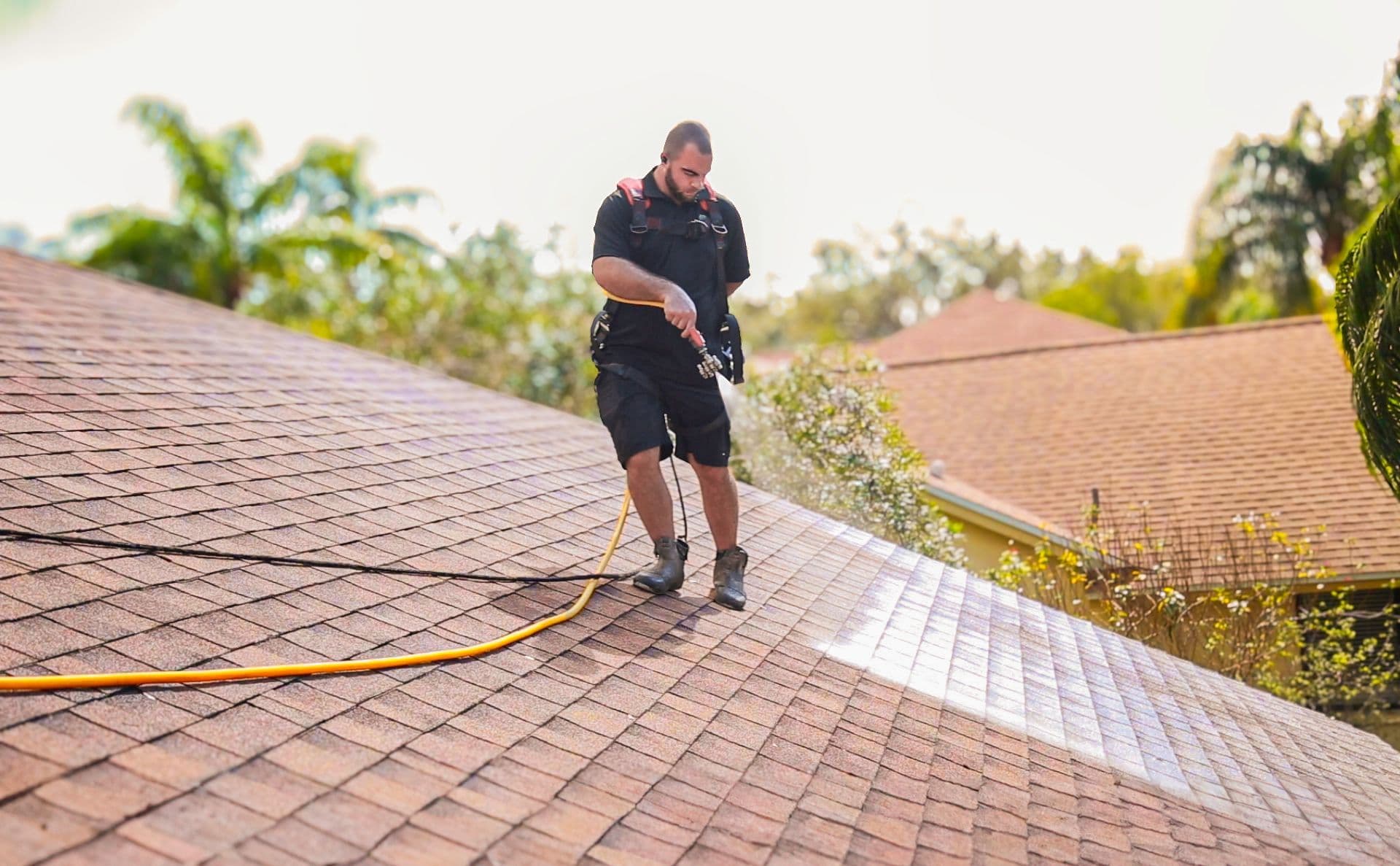
- 5Single-day application by a certified technician.
- 6Post-treatment walkthrough on-site.
- 7Multi-year written warranty in plain English.
- 8Insurance documentation (Certified Life Letter for Florida).
What we do differently
Shingle Hero is a brand we built specifically because we got tired of seeing the bad version of this industry. The product is 95% plant-based, soy-derived, lab-tested with third-party data. Every job is one-day on-site by a certified Shingle Hero technician, with Plant Hero landscape protection before any spray touches the roof. Every job is backed by a 5-year transferable written warranty.
A treatment recommendation should explain the observed roof condition, the work included and its limitations. Ask for supporting evidence and the written warranty rather than relying on a roof-count or added-years claim.
How to verify before you book
- Ask for the product name and request the manufacturer technical data sheet.
- Ask if the formula is plant-based or petroleum-solvent based.
- Ask for written warranty terms before the inspection.
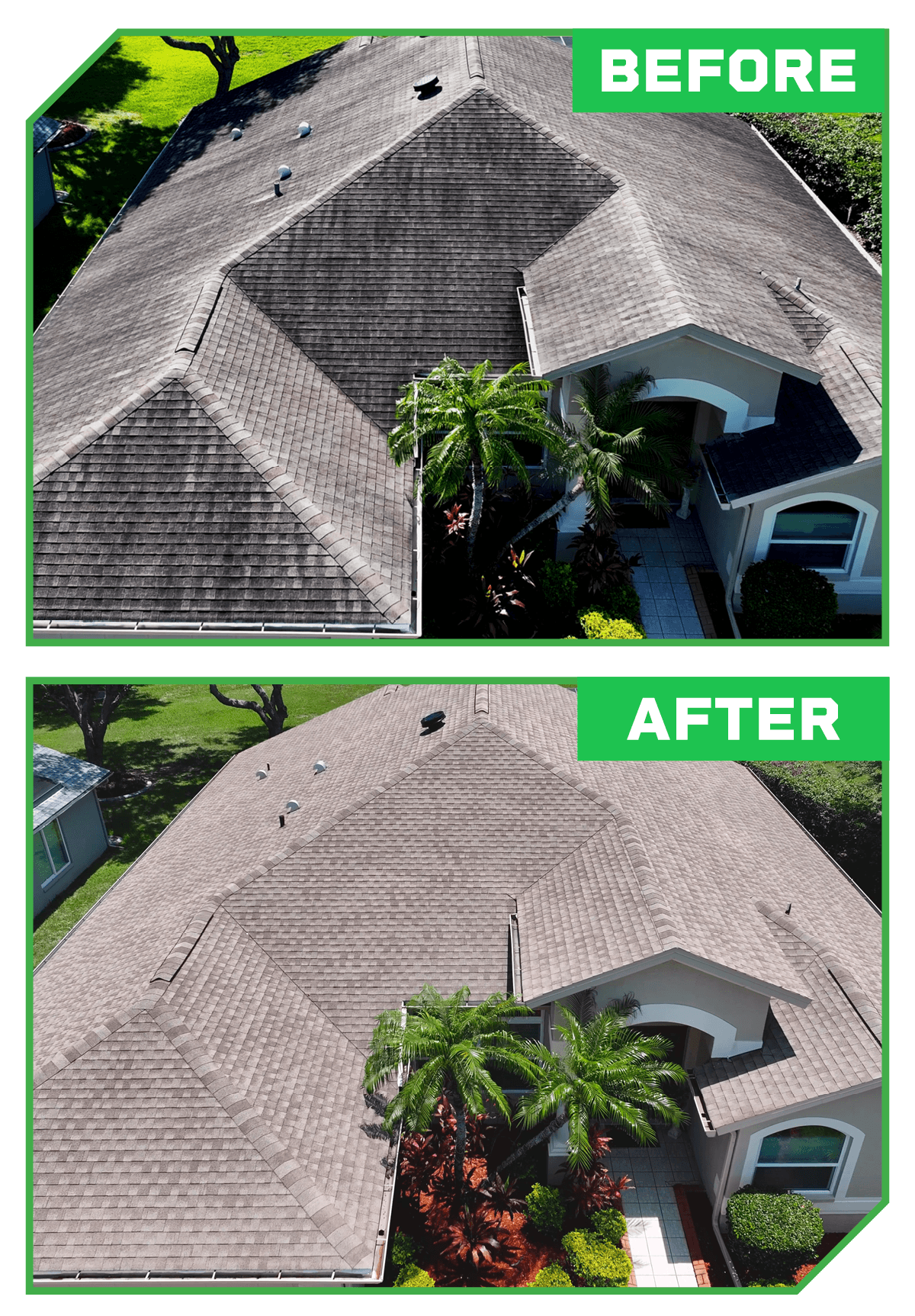
- Ask to see real local before/after photos.
- Ask if the operator will turn away a roof that does not qualify.
- Look up the company Google reviews for specifics, not just star counts.
- For Florida: ask if they provide a Certified Life Letter and which carriers accept it.
Frequently asked questions
Is roof rejuvenation a scam?
Roof rejuvenation is a real treatment category, but eligibility and the written scope matter. Be cautious of a provider who promises a fixed added lifespan without evidence or recommends treatment without checking the roof’s condition.
Does insurance accept the work?
Ask your agent what documentation and inspector qualifications your carrier requires. Roof-condition records and a treatment letter are not a guarantee of renewal, and they may not replace the inspection the underwriter requests.
How long does the treatment last?
Results depend on the roof and its condition. Review the written warranty, exclusions and maintenance requirements; laboratory material tests do not establish a fixed number of extra years on your home.
Will it work on a roof that is leaking?
No. Rejuvenation does not stop leaks. If you have an active leak, that is a repair conversation first.
What does it cost compared to replacement?
A typical Florida asphalt shingle replacement runs $15,000 to $25,000+ in 2026. Rejuvenation typically runs 80 to 90 percent less. Exact pricing requires a free inspection.
The bottom line
Evaluate the roof, the local operator, the evidence and the written scope together. Treatment is not suitable for every roof, and neither a photograph nor a material test establishes a specific added lifespan for your home.
Checking a Tampa-area provider
Ask who will perform the work, which business is responsible for the written scope, and whom to contact about the warranty. A manufacturer, a local dealer and an insurer can have different roles. A treatment recommendation should explain the roof’s condition and the limits of the proposed work.
The Tampa service page identifies Shingle Hero’s local operator and provides a path to an assessment. For evidence questions, review the independent lab results and their limitations. Do not treat a cleaner appearance, a testimonial, or a material test as proof of a specific remaining roof lifespan.
Free roof assessment. We tell you straight if you qualify. We tell you straight if you do not. No pressure, no sales trick, no cost.