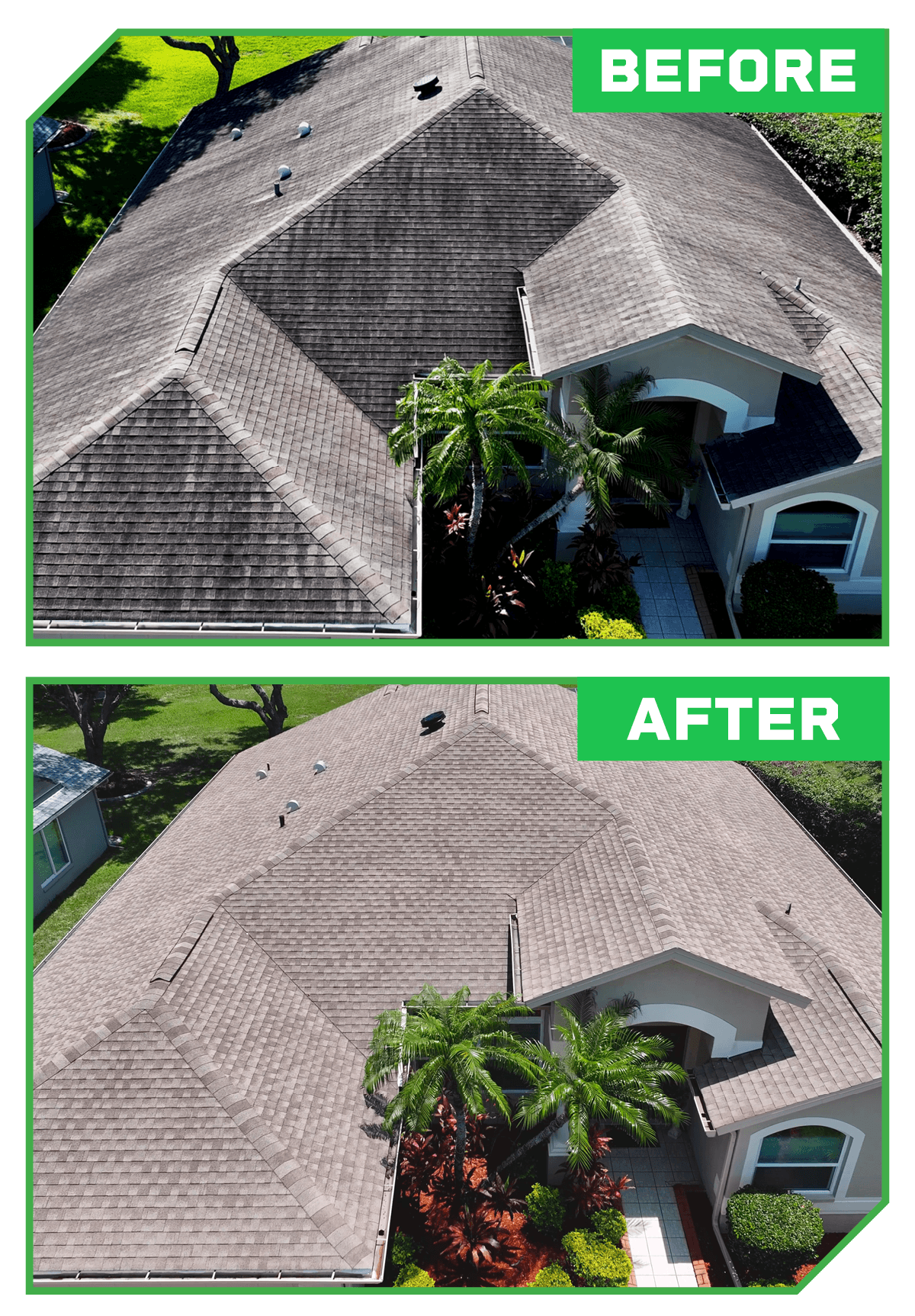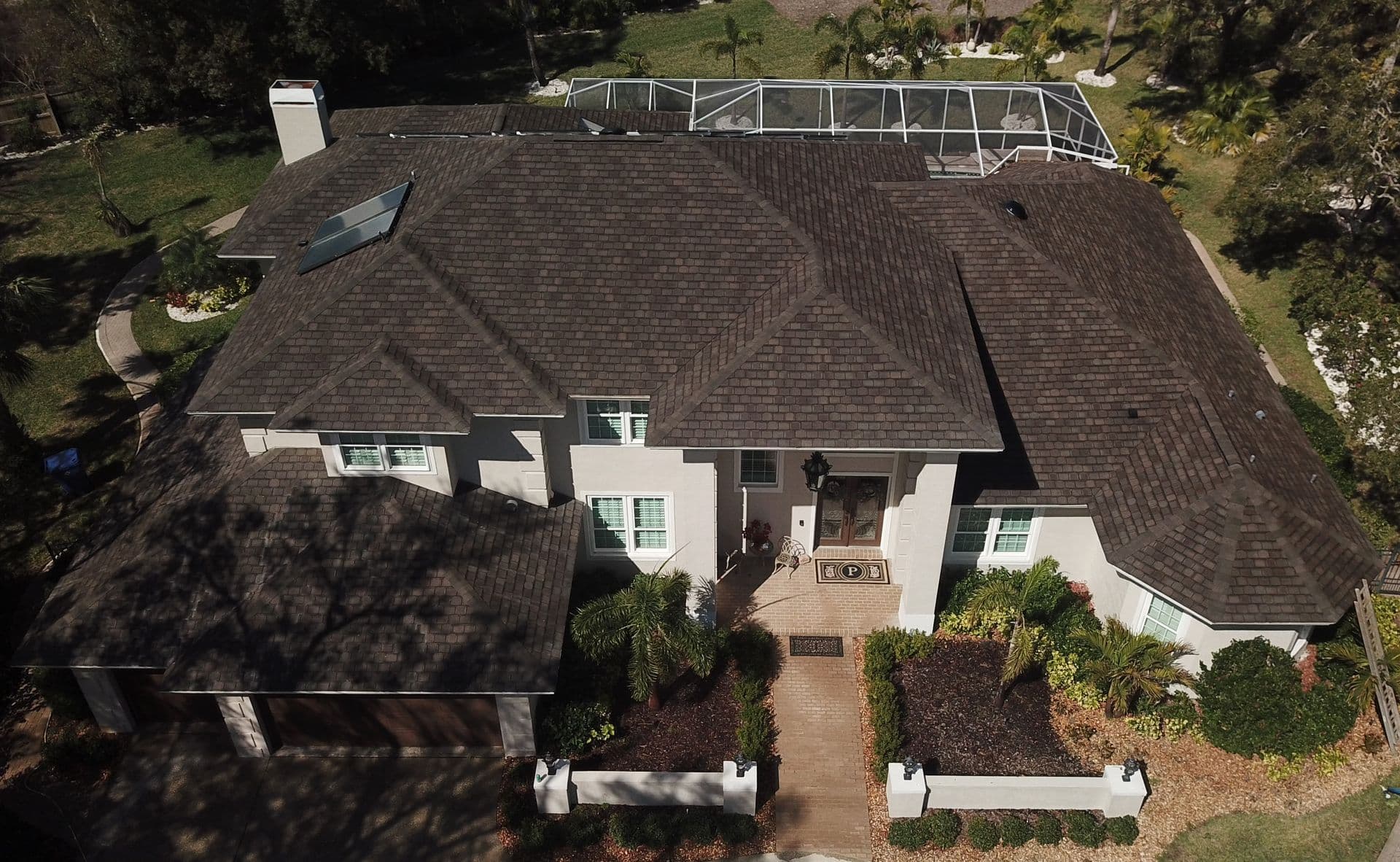
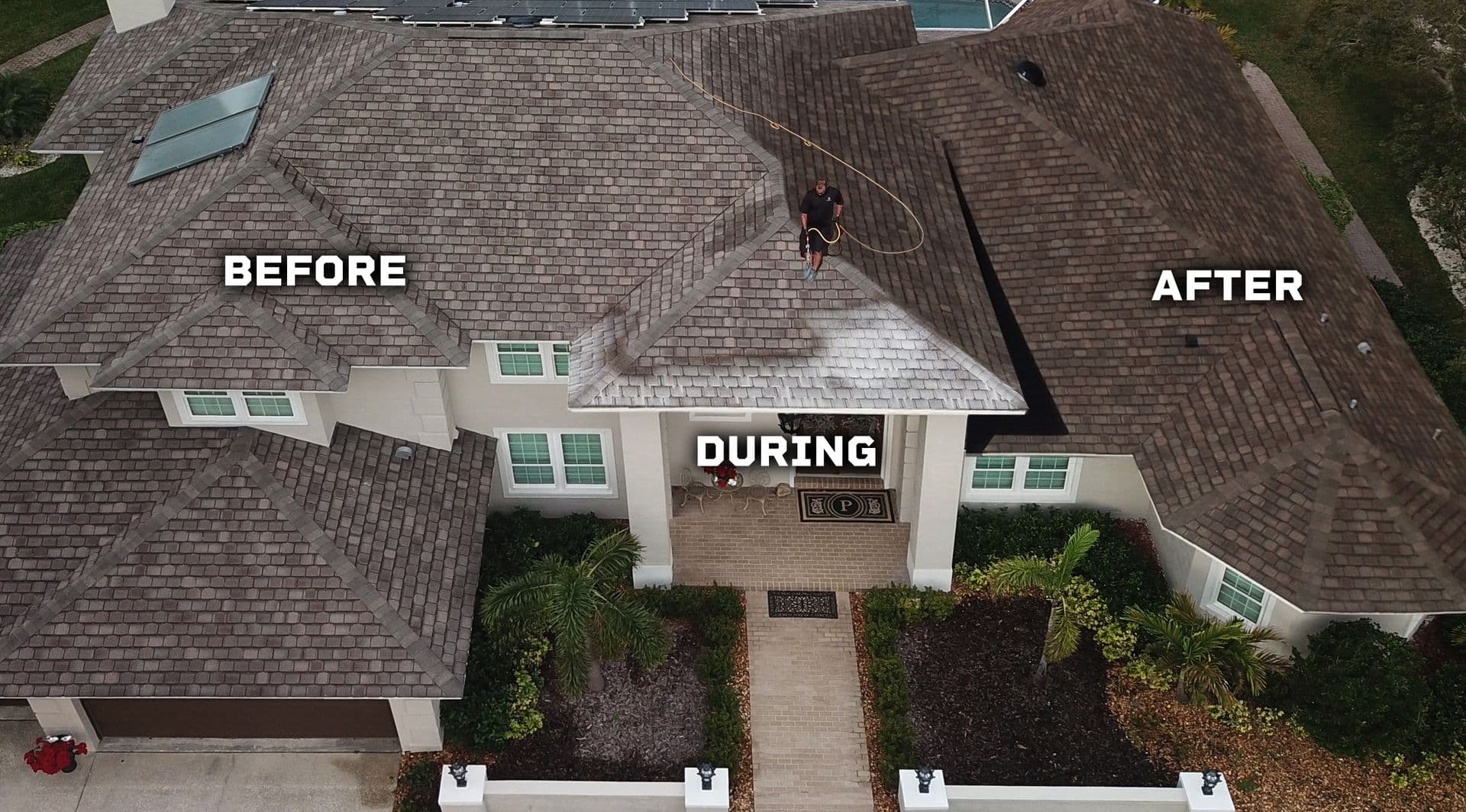
Asphalt shingle restoration starts with deciding what an existing roof actually needs. For a Tampa Bay homeowner, that can mean cleaning, localized repair, a rejuvenation treatment for eligible shingles, replacement, or a combination. Those services solve different problems. A dark roof is not automatically a failing roof, and a cleaner roof is not automatically a restored roof.
What asphalt shingle restoration means
Restoration describes work on an existing roof rather than a complete tear-off and replacement. Roof rejuvenation is one possible part of that work: a treatment intended for eligible aging asphalt shingles. It does not replace missing shingles, rebuild lost granules, repair a leak or correct damaged decking. Have the assessment separate surface appearance from the condition of the roof system.
If your main concern is dark streaking, start with roof cleaning versus roof rejuvenation. Cleaning addresses surface growth and staining. Whether a rejuvenation treatment also makes sense is a separate assessment.
Is your roof a candidate?
The current roof condition matters more than the age of the house or its neighborhood. Look for a written explanation of the roof material, installation history where known, shingle integrity and repair needs. A single age range or a flexible shingle tab cannot establish that an entire roof qualifies.
- Confirm that the existing material is asphalt shingle. Tile and metal need different service approaches.
- Assess granule coverage, shingle condition, seal strips and visible damage across the roof slopes.
- Check flashing, penetrations, valleys and reported leak areas.
- Identify missing shingles, deterioration or signs that decking needs further evaluation.
- Separate necessary repairs from optional maintenance and proposed treatment.
Missing shingles, extensive deterioration, persistent leaks or suspected decking damage need repair or replacement evaluation. Rejuvenation should not be used to postpone work that the roof needs now. An assessment may also find that a relatively newer roof needs maintenance rather than treatment.
The assessment and preparation sequence
- 1Share the roof installation record, prior repair history and the location of any leaks. Photos taken safely from the ground can help explain your concerns.
- 2Have the existing roof assessed and ask for the findings and recommendations in writing.
- 3Resolve necessary repair work before treatment. If another trade is needed, establish that scope first.
- 4Confirm whether debris removal or cleaning is needed and whether it is included in the estimate.
- 5Discuss access, landscaping, pets, nearby surfaces and any association requirements. Ask for the product handling and protection plan.
- 6For an eligible roof, agree on the application scope, documentation and written warranty before scheduling work.
The preparation plan is part of the service. A plant-based description does not replace product handling instructions, and cleaning chemicals are different from rejuvenation products. Ask which products will be used and what precautions apply to your property.
Compare the complete written scope
A useful quote identifies the measured roof area, pitch, access, preparation, repairs and proposed treatment. A smaller upfront price can describe a narrower scope. If replacement is recommended, compare what each option can address rather than treating rejuvenation and a new roof as interchangeable purchases.
Use the roof rejuvenation cost guide to prepare questions about included work, exclusions and price factors. Your property needs its own written estimate; an example price for another home is not a quote for yours.
Evidence, added roof life and warranty terms
Ask what evidence supports the proposed product and how that evidence relates to your roof. Laboratory tests of shingle materials do not measure how many extra years a particular home will get. Before-and-after photographs can document appearance or work, but appearance alone does not establish future roof life.
Read what roof rejuvenation spray can and cannot do for questions to ask about product claims. Request the actual written warranty, who issues it, what is covered, exclusions, maintenance requirements and any retreatment conditions. Distinguish a warranty term from a forecast of your roof lifespan.
Find your published Tampa Bay service area
Shingle Hero has published service-area pages for the communities below. Each page lists service ZIPs and assessment guidance. These are named service areas, not a promise of coverage for every address in an entire county. Confirm your property address when requesting an assessment.
For a broader view of the published locations and overlapping community names, see the Tampa Bay roof rejuvenation service-area guide. Your roof material, condition and written scope still determine the right service.
Comparing written proposals? Use our Tampa roof rejuvenation quote worksheet to record included roof areas, preparation, repairs, exclusions and warranty terms side by side before deciding on price.
Asphalt shingle restoration questions
Can restoration repair a leaking roof?
A leak needs its source and any related damage assessed first. Repair may be part of an agreed restoration scope, but rejuvenation itself is not leak repair. Extensive deterioration or damaged decking may require replacement evaluation.
Can tile roofs be rejuvenated with this treatment?
The rejuvenation service discussed here is for eligible asphalt shingles. A tile roof needs a different assessment and service approach. Confirm the material before comparing treatment quotes.
Does restoration guarantee a specific number of extra years?
No single added-life figure applies to every roof. Current condition, exposure, maintenance and the proposed work matter. Ask for the evidence behind any claim and read the actual warranty terms before deciding.
Request a free assessment, confirm your property address and ask for written options based on your current roof condition.